ADA Q&A: Is This Seat Taken?
May 16, 2026
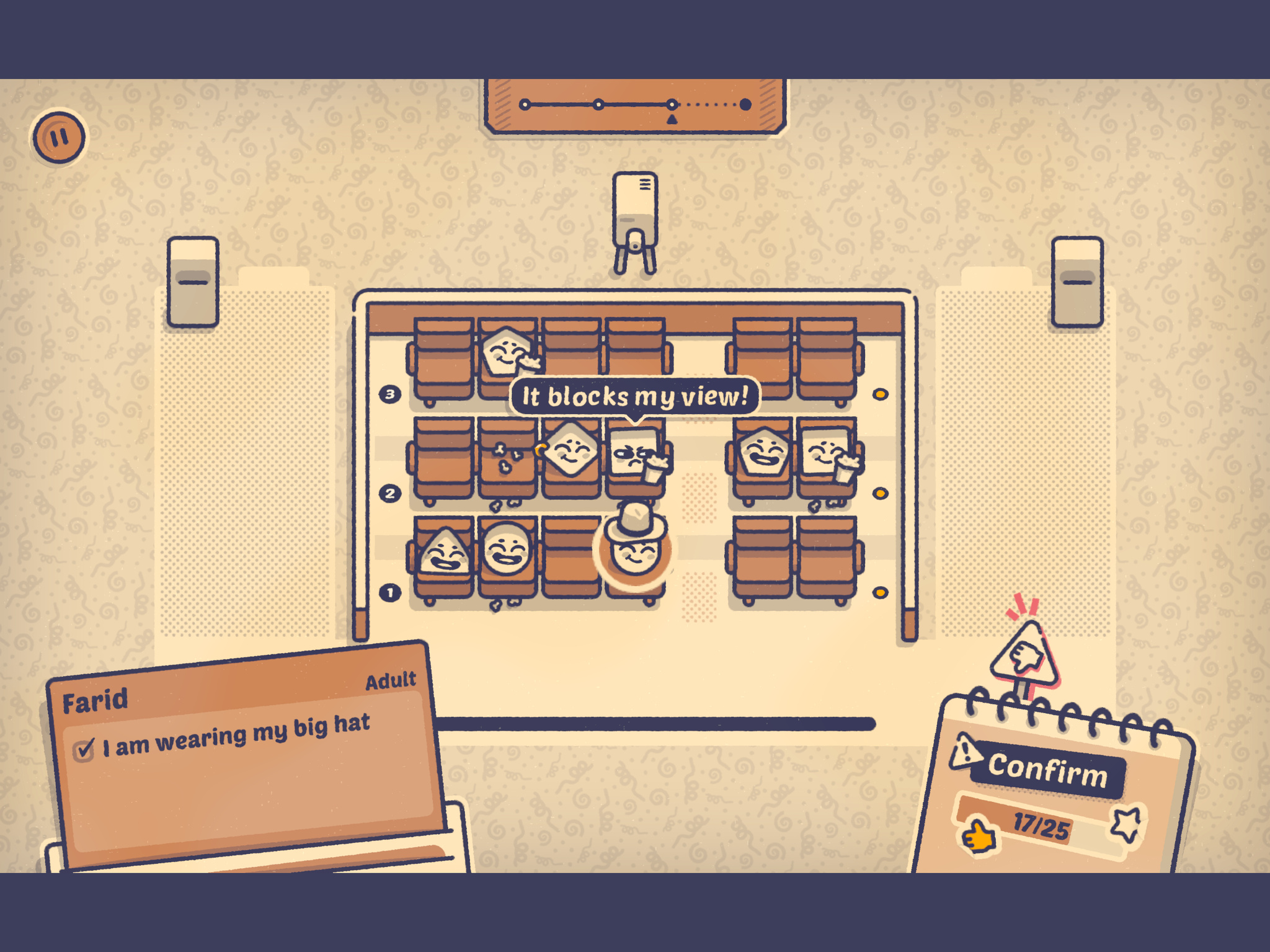
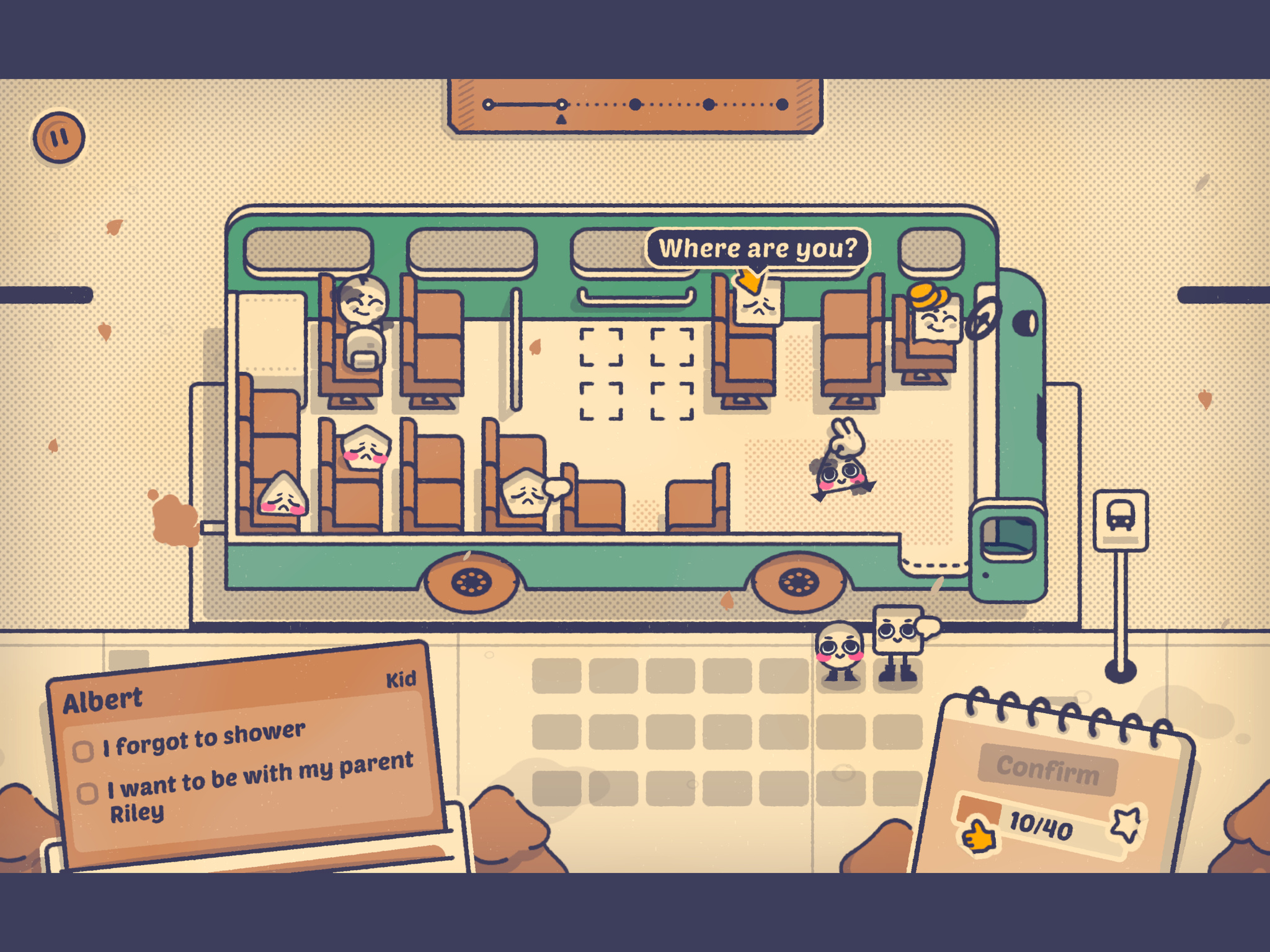
A tricky puzzler dressed up as a Saturday morning cartoon, this delightful logic game hides its puzzles in a fun narrative about the perils of sitting near others on buses, in restaurants, and in other familiar places. Assign people to their preferred seats in accordance with their strange personality quirks (or, in the case of folks who don’t want to sit by people blasting loud music, totally logical quirks).
Plenty of attention is lavished on surrounding elements: Tapping objects in each scene produces playful and unexpected responses, and the interface hides its own Easter eggs. With no timers but lots of smiles, Is This Seat Taken? is worth keeping close at hand.
We caught up with Ausiàs Dalmau from the Poti Poti Studio about working with game designer Sergi Pérez Crespo to create a logic puzzle with a personality all its own.
Is This Seat Taken?
- Team name: Poti Poti
- Available on: iPhone, iPad, Mac
- Team size: 2
- Based in: Spain
- Category: Delight and Fun
Download Is This Seat Taken? from the App Store >
Where did your idea come from?
Dalmau: Sergi and I have always enjoyed making 2D games where you have to sort things or use logical thinking to move them around. Back in 2023, we were at a talk about creating games based on everyday scenarios, and that inspired us to create a game where players organize people on a bus. When we got home, we quickly made a prototype.
How close is the finished game to that prototype?
Dalmau: From an artistic perspective, not much changed! We made small changes like limiting the number of colors and making the facial expressions more recognizable.
The game design changed quite a bit, though. We initially included more complex ideas, but after the first playtests, we realized that limiting the design was better for the game. The fun wasn’t necessarily in the puzzle itself, but in seeing different scenarios and discovering different interactions while solving the puzzle.
Can you share a specific piece of feedback that genuinely changed your direction?
Dalmau: “Driving is not fun.” In one of the early versions, you were the bus driver and could open and close the doors. It was kind of fun, but players didn’t care for it. They only wanted to sort the characters. For them, driving was more of an annoyance. We ended up removing it entirely.
What’s something you’re proud of that might not be immediately apparent to everyone?
Dalmau: I believe that most people think the game has a simple objective. That’s true, but everything in the game exists for a reason: every dialogue line, every little interaction, and every character preference. We designed it by asking ourselves, "Is this necessary? Does this add value to the game?" If the answer was no, we removed it. Sometimes in game development, it feels easier to fix design issues by adding more systems and making it more complex — we tried to do the opposite.
What’s the single most important piece of advice you’d give to a developer or designer just starting out?
Dalmau: Make a game and see if people are interested in it. Show it to your peers and publishers, even if you don’t want a publisher. If you see that people aren’t interested, finish the game as soon as possible and move on to the next one. Making a game is hard, so don’t get discouraged.
Read more developer stories
Developer stories explore best practices and philosophies from some of the most inventive developers in the Apple community. In each story, we go behind the screens with developers, designers, and engineers to find out how they brought their remarkable creations to life.