ADA Q&A: Loss and love in the world of Pine Hearts
May 16, 2026
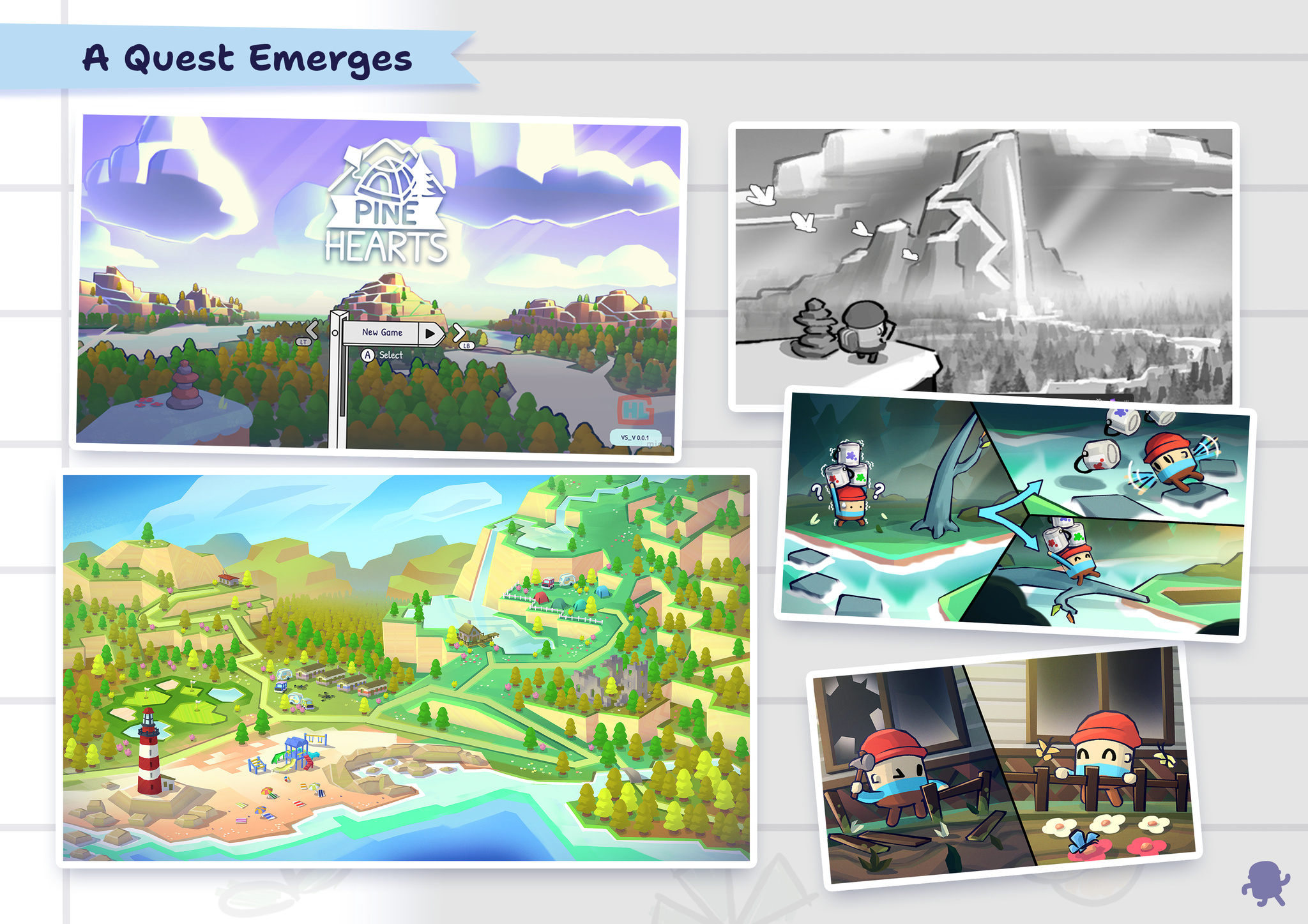
Good deeds are rewarded in the wholesome, hopeful world of Pine Hearts. In this surprisingly moving game, the main character, Tyke, returns to a nature preserve to revisit memories of his late father. The vibe is sweet and sensitive — players level up by lending a helping hand to other parkgoers — and the game clearly communicates its inclusivity options even before play begins, through settings that let players enhance text legibility, customize controls, and ease both motion and sensory feedback. A beautifully conceived experience that shows how grief can eventually give way to comfort and even confidence.
We chatted with studio cofounder Rob Madden about the power of making something personal.
Pine Hearts
- Studio: Hyper Luminal Games Limited
- Publisher: Secret Mode
- Available on: iOS, iPadOS
- Based in: United Kingdom
- Category: Inclusivity
Download Pine Hearts from the App Store >
Pine Hearts feels like a very personal game. Can you tell us the story behind it?
Madden: I lost my dad very suddenly to cancer in 2019. To help come to terms with that loss, I went to the thing I know best, and started to build a little game world that just felt good to be in. As that prototype developed, I realized I could use the game as a way of talking about that feeling of losing someone, and tell that story in a very direct way. My mum once said something that really stuck with me: that my dad “lives on through me.” I felt quite strongly that this could be the core idea of the game. Ultimately, it defined the whole gameplay loop of reliving memories and carrying on the memory of people we care about.
How close is the final game to your original idea?
Madden: Very similar, though it differs in the level of detail and scope of content. We decided quite early that almost every object should be interactive, so it's all about finding little surprises and memorable moments stuffed into the game. Putting the game on mobile unlocked all these tactile touch gestures that elevated the surprises even further.
When did the design feel like it clicked for you?
Madden: When we previewed a demo at an in-person show. After playing, folks would come up to me and want to talk about their own experiences losing someone. I felt humbled that people would be willing to share those details of their lives with a complete stranger, and proud that the game provided the avenue to talk about that sort of stuff.
How did you approach building an inclusive experience, and what specific accessibility features did you incorporate?
Madden: Accessibility was a priority from the start. During development of the core game, we focused on more than 10 settings, including High Contrast Mode, font scaling, simplified controls, and control remapping. Our intent was to provide as much accessibility as we could across a broad range of players.
We also wanted players to start with an accessibility onboarding flow, to allow them to make choices before gameplay begins. For the iPhone version, the team really focused on ensuring the experience includes dedicated touch controls and the flexibility for controller support. We were also able to bring over all existing accessibility settings and features from the base game.
What advice would you give to developers just starting out?
Madden: Make stuff that feels personal to you. It doesn't have to be a revolutionary concept. Tell a story from the heart, and you'll be surprised by how much of an impact it can have.
Read more developer stories
Developer stories explore best practices and philosophies from some of the most inventive developers in the Apple community. In each story, we go behind the screens with developers, designers, and engineers to find out how they brought their remarkable creations to life.