Jordi Bruin on simplicity, sample projects, and the “2-2-2 Method”
November 10, 2026
You may not recognize Jordi Bruin’s name, but there’s a good chance you know his work. The Amsterdam-based indie developer has created such crowd-pleasing apps as Posture Pal (which lets people know when they’re slouching by using the motion sensors in their AirPods) and Navi (which translates conversations as they’re happening). Working with a small team at his company, Good Snooze, Bruin has shipped more than 20 titles to the App Store.
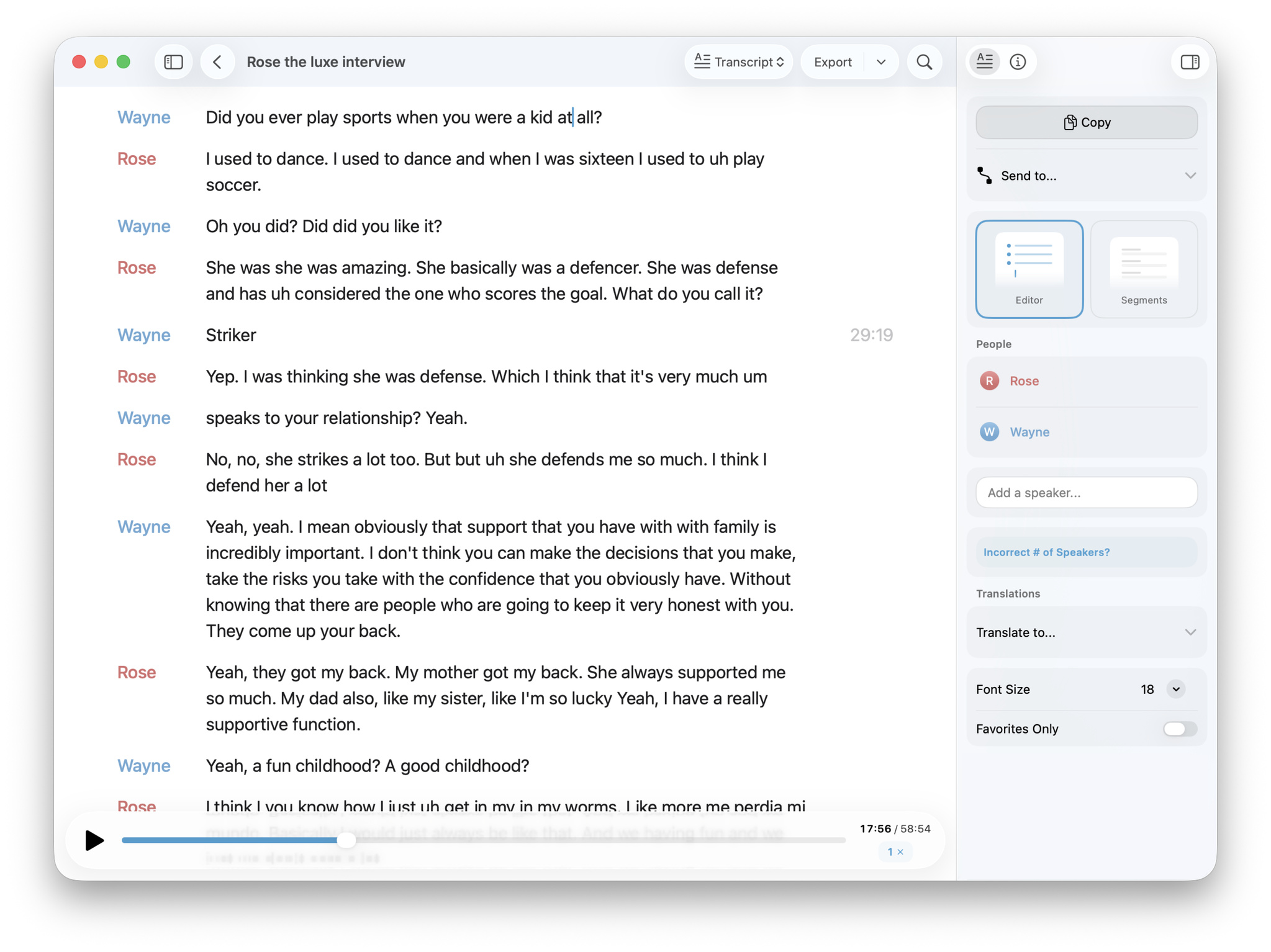
One of Bruin’s most popular releases is Whisper Transcription, an AI-powered tool that transcribes audio files and messages. Released in 2023, Whisper Transcription can recognize more than 100 languages, and all of its transcriptions are stored on device — meaning no data is sent to the cloud. We caught up with Bruin to discuss Whisper Transcription’s origins, the importance of sample projects, and the not-so-secret formula he’s used to get so many apps out the door.
Whisper Transcription
- Available on: iPhone, iPad, Mac
- Team size: 3
- Based in: Amsterdam
Download Whisper Transcription from the App Store >
Your apps all seem to have a common purpose: to solve everyday problems. What interests you about smaller-scale projects?
Bruin: My goal isn’t to make a super-successful, feature-heavy app. That approach comes with variables that are hard to estimate. How do you market the app? How do you guide people to it every day?
Instead, I focus on making utilities that solve a specific problem in the simplest way possible. It’s almost like giving someone a screwdriver and saying, “This is what you use to unscrew a screw.” There doesn’t need to be a big narrative around it. And because my apps are small in scope, I can easily envision the total amount of work required to solve the problem.
How did Whisper Transcription come about?
Bruin: I wanted to create a course explaining how to build bite-sized apps. But I didn’t want to type everything out — I wanted to speak and have my words transcribed. To solve that problem, I built the first version of Whisper Transcription. It was incredibly basic, and it did little else besides transcribing. It’s very easy to fall into the trap of trying to make everything perfect from the start, rather than focusing on a few core features.
Once Whisper Transcription started taking off, I began adding more features and expanding support. Over time, it organically grew into a full-fledged product. That’s the beauty of starting with small solutions: You can ship something meaningful, see if it gains traction, and then decide if it’s worth a larger investment of your time.
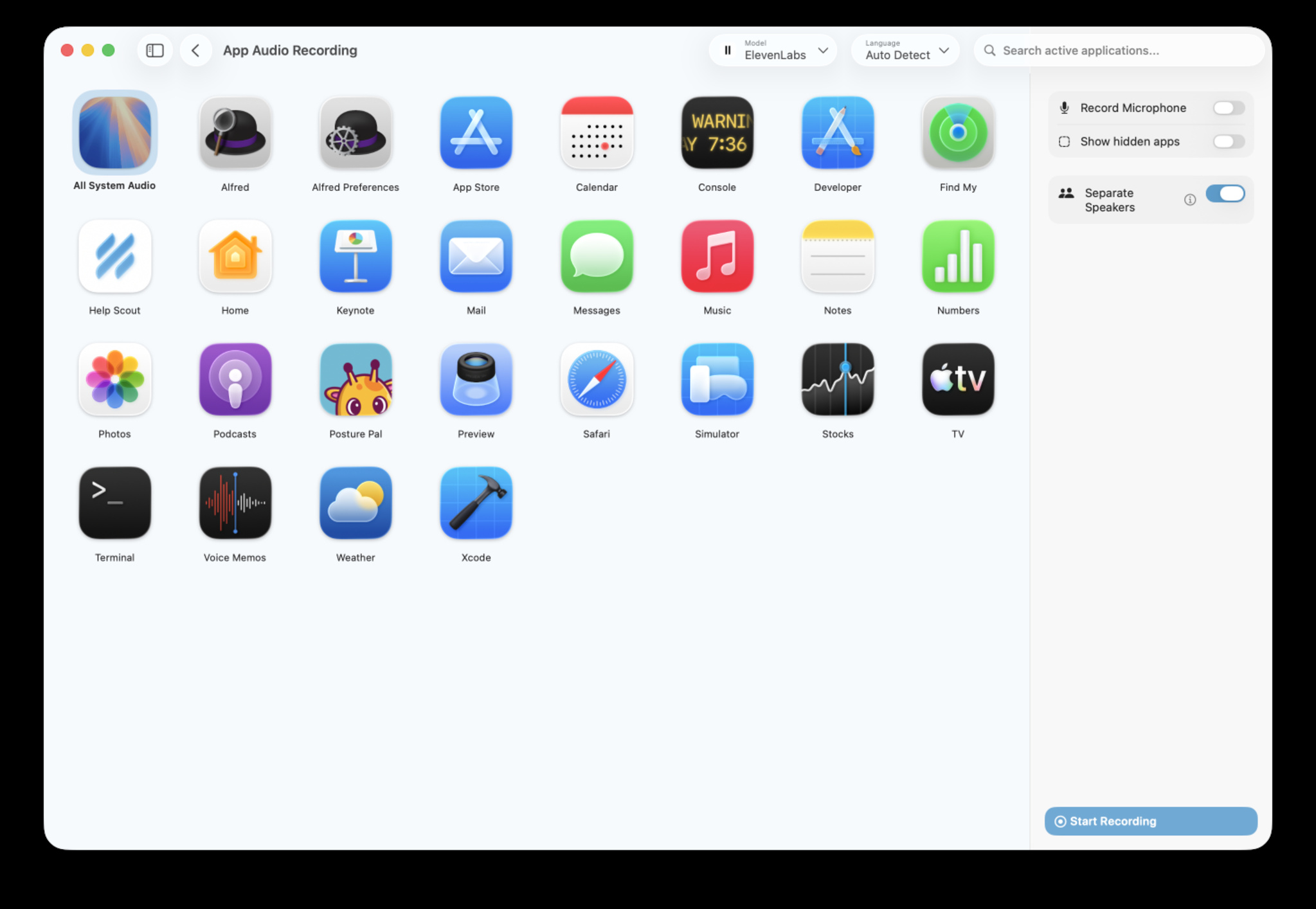
Whisper Transcription was built using various Apple technologies, including the Speech and App Intents frameworks. What other Apple tools and technologies have been crucial to your development career?
Bruin: The biggest one for me is SwiftUI, which launched right as I was starting to learn how to program. So, even though SwiftUI was new, I thought, “I’m going to skip the old stuff and just do everything in this.” SwiftUI makes it incredibly easy to go from an idea to a working prototype in days, sometimes even hours. I don’t have to worry about the underlying implementation details right away. Instead, I can focus on the problem I’m trying to solve and the overall experience, knowing things will work as expected. From there, I can dive deeper into the framework and figure out which features make the most sense.
How do you find new technologies to work with?
Bruin: I love exploring sample projects. A few years ago, Apple released a sample project for an app that scanned a business card, recognized the phone number, and saved it. I didn’t know anything about text recognition at the time, so I started digging into the code. That project helped me build an early version of Soosee, an app that scans product ingredient labels and highlights potential allergens. That’s the power of sample projects: They show you what’s possible with a framework so you can quickly add those capabilities to your toolbox.
Whisper Transcription keeps all transcriptions on device, rather than processing data in the cloud. Why was that privacy-first approach important to you?
Bruin: I try to design all my apps to run purely on device to eliminate privacy concerns. They don’t collect or store any data because I simply don’t want to hold anyone’s personal information. I want to know as little as possible about people, as long as the app works flawlessly.
From a user perspective, it’s also a superior experience. Apple devices have become so powerful that processing data locally is often much faster than sending it to the cloud. Plus, keeping everything on device means no additional costs for people — and no server bills for me, either.
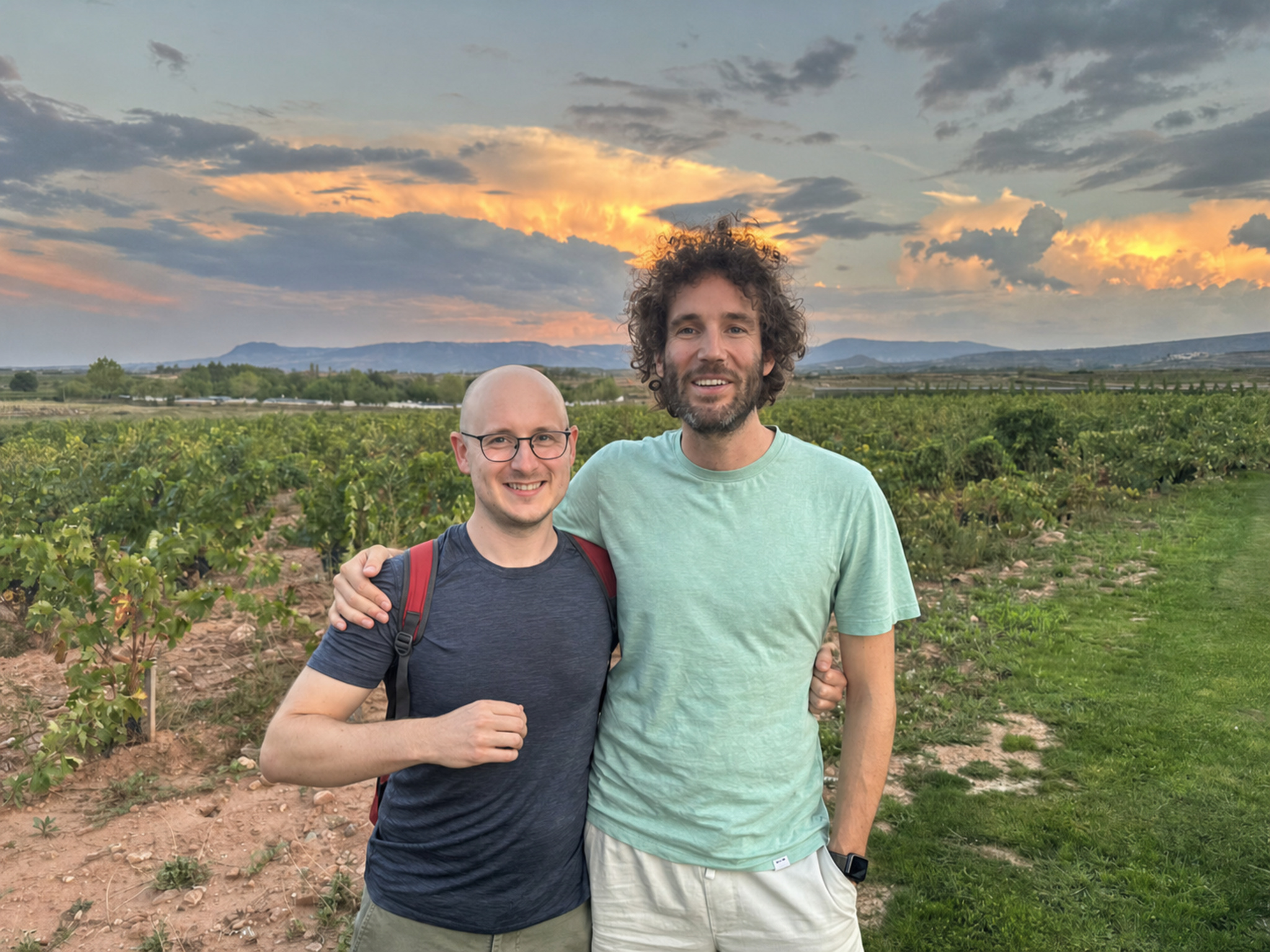
Jordi Bruin, at right, with his collaborator on Whisper Transcription, Ian Dundas.
A few years ago, you began giving talks about a creative framework you’ve developed over the years, which you’ve dubbed the “2-2-2 Method.” Tell us about that.
Bruin: A lot of developers I spoke with were struggling to ship their projects. They would overthink an idea and spend months on it — something I’d gone through myself. So I came up with a structured approach. I’d ask myself, “What do I want to make?” Then, I’d spend two hours prototyping the app to see if it was feasible, two days building a version I could share with friends, and two weeks to get it out the door.
It was incredibly freeing. I started enjoying programming and design so much more once I stopped overthinking and decided, “Let me just get something out.” The response to the method was amazing. After my talks, people would sometimes come up to me in tears because they felt so inspired. It was a surreal experience for me. I’d think, “I’m just explaining how to make an app!”
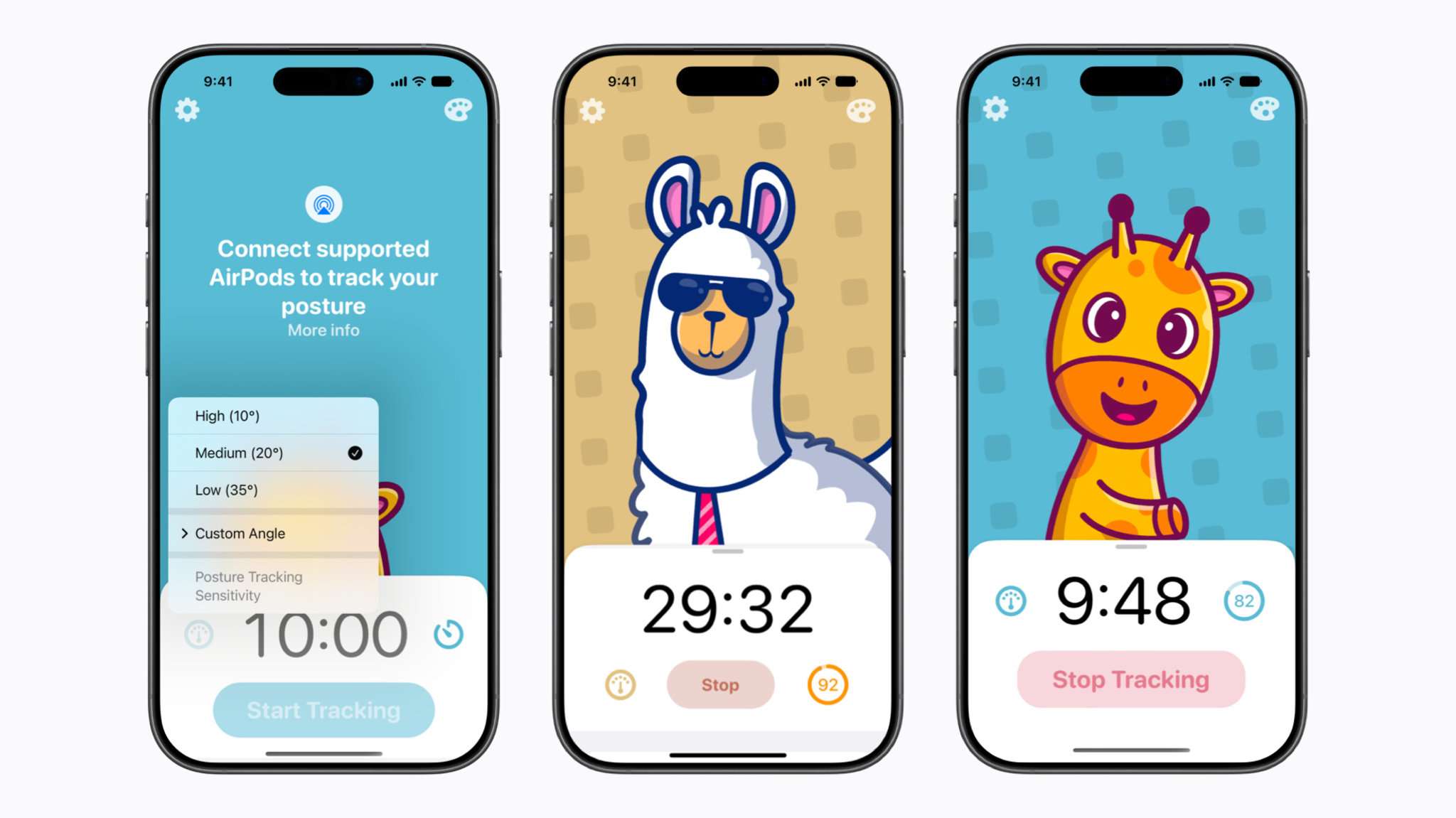
Bruin's Posture Pal lets people know when they’re slouching (in the most adorable way possible).
As an indie developer, how do you handle the workload and expectations that come with having a hit title?
Bruin: Whisper Transcription took up almost all of my focus over the past year. It’s hard to justify starting a new project when you have an existing one that is generating revenue, growing its audience, and constantly needing improvements.
But things are stabilizing now. I recently attended a Vipassana retreat — a silent, 10-day meditation experience. By day six, I was brimming with new app ideas. I came away deeply focused on creating a calm environment where people can collaborate and support one another. My upcoming projects are driven purely by my passions: I want to build things centered around music, productivity, and helping people make the most of their time.
Between the sustainable income from my current apps, the inspiration I’ve found, and the technical knowledge I’ve accumulated, I have a fantastic foundation. There were projects I wouldn’t have felt capable of building a few years ago that I now feel ready to bring to life. My confidence in what I can build has grown, and with that, my ambition.
Keep reading
Developer stories explore best practices and philosophies from some of the most inventive developers in the Apple community. In each story, we go behind the screens with developers, designers, and engineers to find out how they brought their remarkable creations to life.