ADA Q&A: Seeding imagination in Sago Mini Jinja’s Garden
May 16, 2026
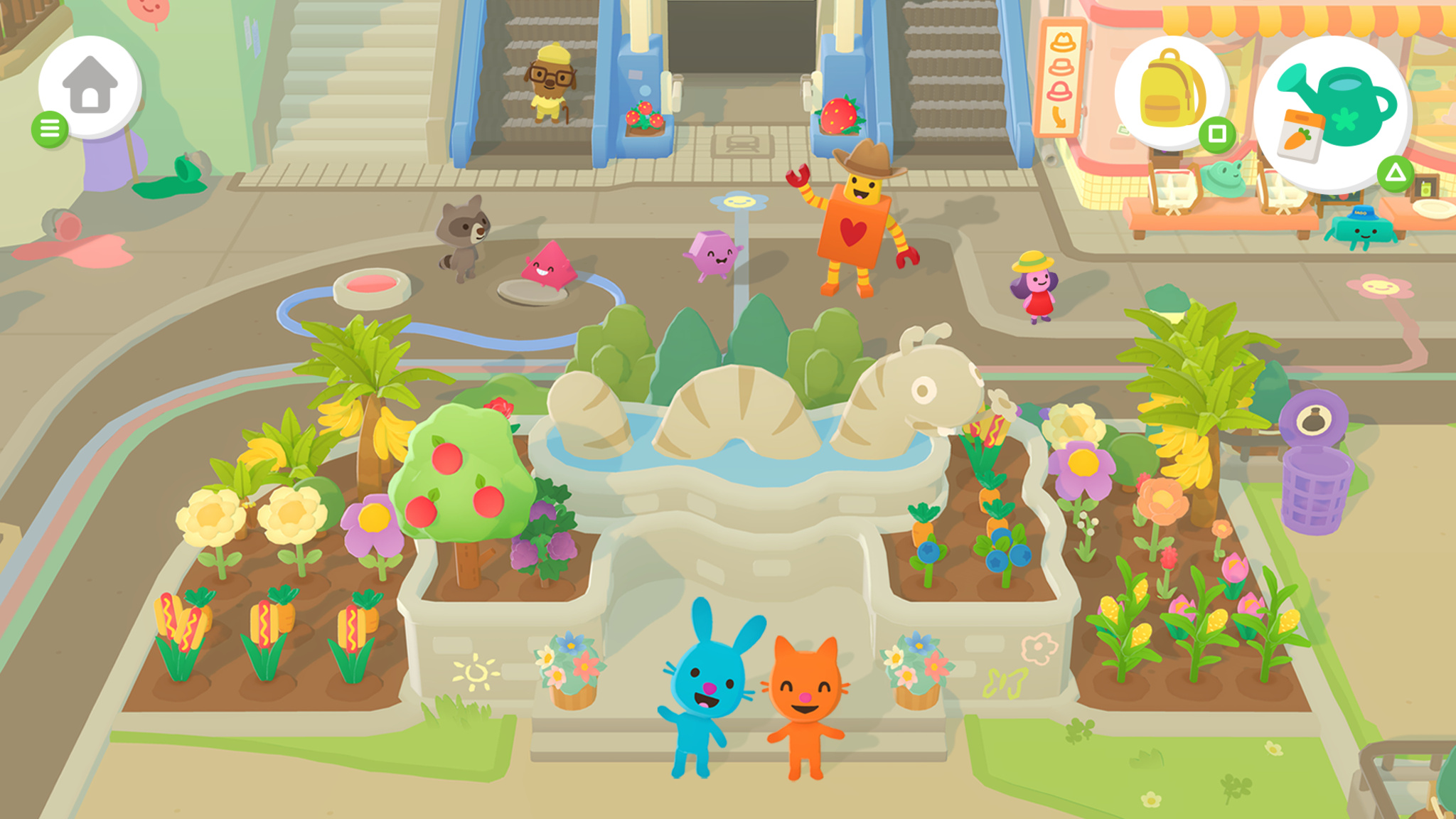
Sago Mini Jinja’s Garden is remarkable for what it doesn’t include. By relying on natural swipe-to-move controls and interactions that require no reading, this boundless playground for kids ages 3–6 integrates inclusivity features so organically that players and caregivers may not even notice them. Once again, Sago Mini has shown great care in crafting an accessible world where kids can help neighbors, play soccer, chase a mouse for cheese, or try on a party hat. There’s no timer, no pressure — just an enchanting experience that’s open to all.
We caught up with game designer Ben Stirling, general manager Jason Krogh, and senior production manager Danielle Rainey about designing for the littlest audiences.
Sago Mini Jinja’s Garden
- Team name: Sago Mini
- Available on: iOS, iPadOS, macOS, tvOS (Apple Arcade)
- Based in: Canada
- Category: Interaction
Download Sago Mini Jinja’s Garden from the App Store >
What was the spark that led to Sago Mini Jinja’s Garden?
Krogh: It all started with an awareness that young players love cozy games but really struggle with the controls and mechanics. We'd hear stories of kids playing along with parents or siblings but always struggling to play independently. It felt like the perfect challenge for our team!
Walk us through your earliest concepts. How close is the final product to those original ideas?
Krogh: Our earliest concepts were more narrative-driven, anchored in a story of Jinja going to visit her grandmother Nola and being surprised to see that her once-beautiful garden is now abandoned and overgrown. Jinja and Nola team up to bring the garden back to life. Over time, we brought in more characters, a light quest system, and a more open-world approach.
Where did you follow platform conventions, and where did you intentionally push boundaries?
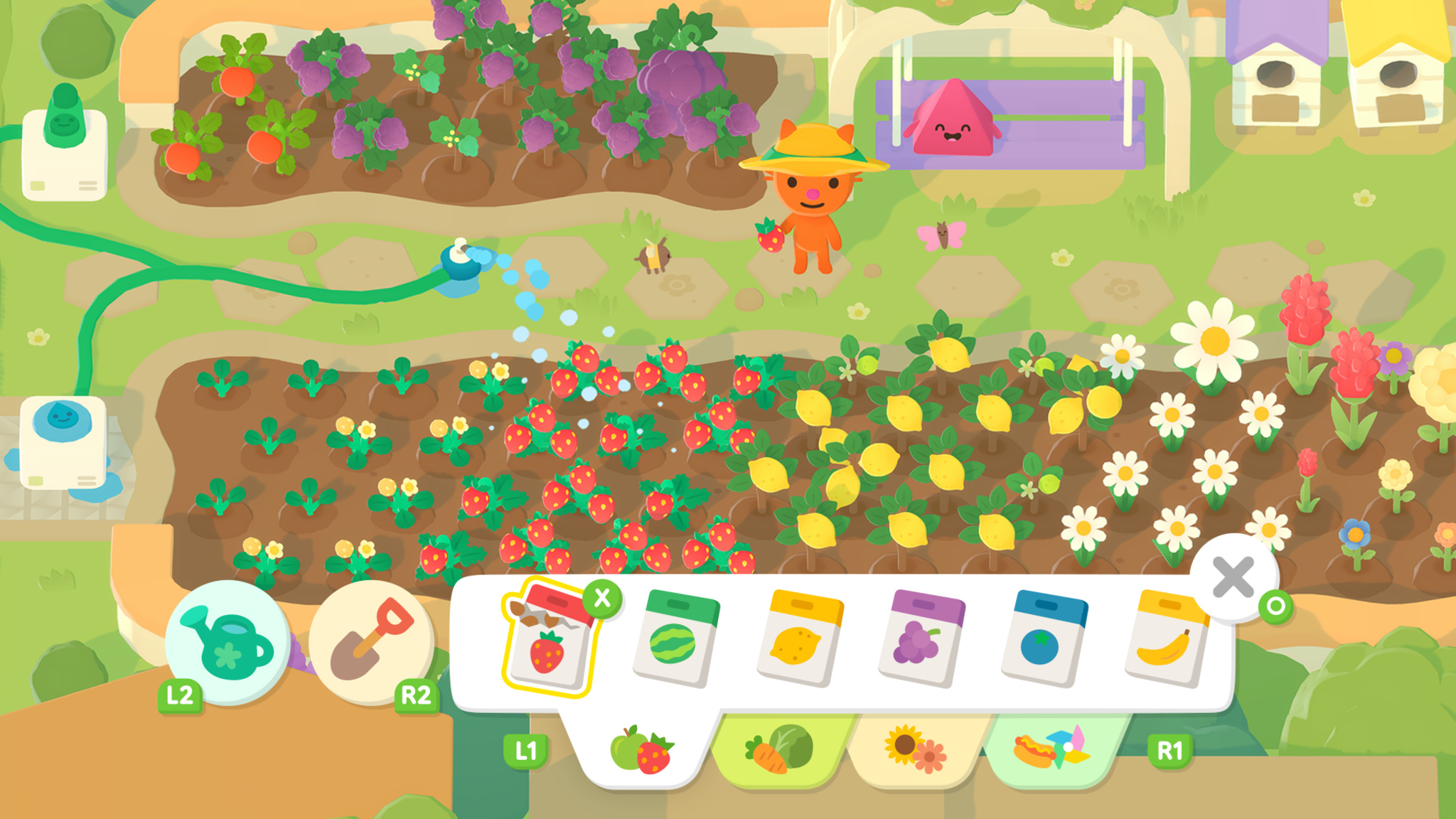
Rainey: We followed conventions by embracing classic cozy mechanics like gardening, helping your neighbors, and cooking. And we pushed boundaries by adapting these tried-and-true mechanics for preschoolers. The key to our gardening mechanic is immediacy: simply water the plant and seconds later it’s fully grown. There's no dialogue either; we lean on visual communication, so our interactions are designed with no spoken or written words. We rely on simple exchanges, too: players don’t need to build up high numbers of items or currency to complete a challenge. A single coin or a few carrots will do the trick.
Can you talk about the playtesting process?
Stirling: We initially designed the game for purely open-ended play. But during playtests, we watched children repeatedly ask their parents, "What should I do?" while wandering past empty gardens. The moment they stumbled across a character with a thought bubble, their engagement skyrocketed. They rushed to grow the item, claim their prize, and immediately hunt for the next challenge.
This shifted our direction to more goal-based play. We pivoted so nearly every character now starts with a request. And we added opening cinematics and intuitive in-world checklists to guide young players. But starting open-ended actually became our superpower. It ensured that when we layered goal-oriented gameplay back in, the goals were perfectly tailored to what our audience found rewarding.
What was the toughest design decision you had to make along the way?
Stirling: Overhauling Jinja’s movement. Originally, she ran dynamically toward wherever a player held their finger. While this felt natural to adults, playtests showed it was too chaotic for preschoolers — accidental touches sent Jinja lurching, creating major frustration.
We heavily debated our solution because it meant deliberately slowing down the game’s overall pace. We pivoted to a system where holding the screen draws a dotted path and rotates Jinja, but she doesn’t run until the player lifts their finger. This gave children true intentional control, allowing them to calmly scan the world. And the dotted line visually reassures the child: “Don’t worry, Jinja is still going where you asked."
Did the game change based on any real-world behavior after launch?
Stirling: At launch, the entire world was unlocked right away because we didn’t want to gate exploration for young players. But seeing how deeply children engaged with the goals and quests pushed us to reassess. While areas remain free to enter, the main play features now unlock through quests — keeping kids continuously engaged in the core gardening loops and giving them the satisfying feeling that they built each new area themselves.
What surprised you most about how kids actually played Jinja’s Garden?
Stirling: We assumed preschoolers played entirely in the moment and would get frustrated by long-term challenges, like a quest requiring a plant they hadn’t unlocked yet. Multiday testing completely surprised us. When kids encountered a request for an unavailable item, they didn’t get upset — they logged it as a mental checklist. Days later, they would still vocalize, “I still need to find X,” and finding it sparked audible excitement. It's been incredibly rewarding to see players embrace and celebrate long-term goals.
What advice would you give to a developer or designer just starting out?
Krogh: Find great collaborators, lead with the interaction design (not the artwork), and playtest early and often.
Read more developer stories
Developer stories explore best practices and philosophies from some of the most inventive developers in the Apple community. In each story, we go behind the screens with developers, designers, and engineers to find out how they brought their remarkable creations to life.